
What will I learn?
This module is designed to highlight the initial primary actions a club should take to streamline the management and coordination of volunteers in a sport club environment.
How long will it take?
This module will take approximately 15 minutesto complete.
Who should complete this module?
This module is relevant for any club leaders that are responsible for recruiting, coordinating, retaining, and recognising volunteers. Relevant club leaders may include: Volunteer Coordinator,President, Vice President, Secretary, and General Committee Members.
Section 1
Sustainable approaches to volunteer recruitment

Strategic implementation of volunteer structures creates a stable and productive platform for sports clubs to thrive

Creating a larger volunteer workforce
Volunteer coordination helps attract and establish an expanded workforce that promotes sharing the volunteer workload
Creating a positive culture of volunteerism
Embedding volunteerism practices into the foundation of club operations promotes a sense of belonging and community-mindedness amongst members
Everyone is recognised for their efforts
Volunteer coordination ensures that clubs are acknowledging the work of members off the playing field, court, or pitch helps ensure everyone feels as though they are contributing to the success of the club.
Improves volunteer experience
A well-coordinated volunteer workforce ensures better retention of volunteers and members.
Section 2
To effectively coordinator and manage the ongoing recruitment, retention, and recognition of volunteers in a club environment it is essential to have a club leader that can oversee this process. The specific title of this role is Volunteer Coordinator.
NOTE: This can be a shared role and should be supported by all committee members.
In some clubs, the responsibilities of the Volunteer Coordinator are suitable to be the primary function of the Vice President or a General Committee Member as it provides them with a good opportunity to familiarise themselves with and oversee all the operational and volunteer requirements of the club.
The following is a brief description of what the role entails:
Section 3
Conducting a Volunteer Roles Audit and Creating a Volunteer Roles Spreadsheet
A Volunteer Roles Audit is designed to help identify what roles and tasks need to be filled and undertaken to ensure your club runs smoothly.
This process is ongoing and spreadsheet of roles should be updated over the course of a year.
Section 4
The following aspects of each role identified in the Volunteer Role audit should be detailed:
Role Type
What area of club operations does this role fit? (Examples will be detailed in the following section of the module)
Desirable skills and/or attributes
What skills and attributes are required to complete the role to a satisfactory standard?
Time commitment
Role category
Is the role a casual/roster-based role or a seasonal/ongoing role?
Section 5
The following are general role types and examples that may exist within a club:
Governance roles
Executive committee roles – President, Vice President, Secretary, Treasurer
Coordinator roles (General Committee Members)
Volunteer Coordinator, Junior coordinator, Senior coordinator, Umpire coordinator, Men’s Coordinator, Women’s Coordinator, etc
Team/competition management roles
Team managers, competition coordinators, or gameday administration
Administration and communication roles
Social media, club communications, sponsorship, merchandise, grants
Game day/competition roles
Coach, timekeeper, scorekeeper, umpire
Hospitality roles
Canteen, bar, club dinners, gate attendees
Events and social functions
Social events coordinator, fundraising events coordinator, catering
Facility and equipmentmaintenance
Groundskeeper, cleaners, uniform and equipment management
Other
Other miscellaneous roles that may be unique to your club
Section 6
Organise the information into a simple spreadsheet for future reference:

Section 7
Section 8
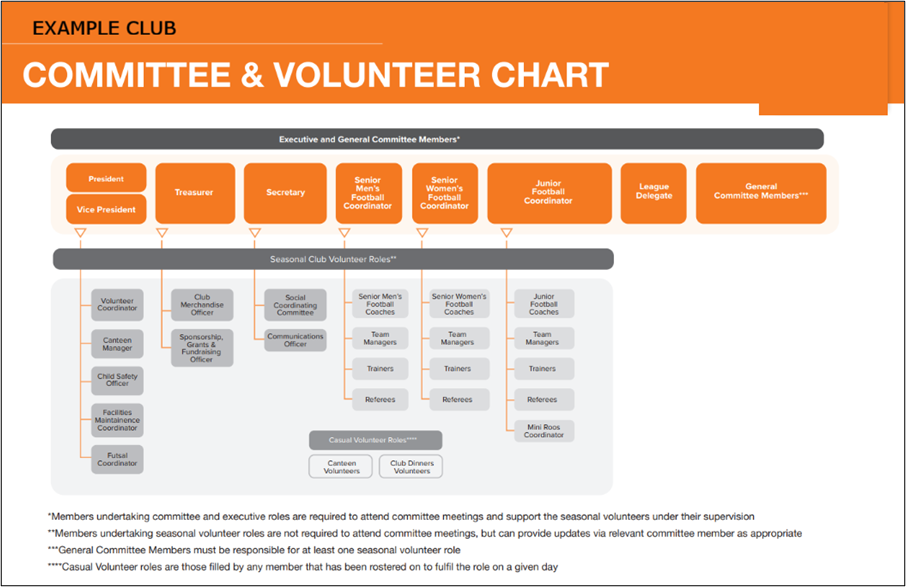
EXAMPLE CHART OF A SOCCER CLUB:
You have finished the Digital Volunteer Management Toolkit Training Module. To continue your learning click on the next module button below.


